
Is It Time to Be Bold—and Move Beyond Biological Treatment?
By GI Aqua Tech
Every industry reaches a moment when improving the familiar is no longer enough. Wastewater treatment may have reached its own.
Before G-Nano, asking whether we could move beyond biological treatment might have seemed academic. Today, operating projects give that question practical substance.
Nano technology has enabled Germany’s GI Aqua Tech to develop integrated, non-biological treatment with exceptional characteristics: energy consumption as low as 0.15 kWh/m³, intelligent on/off operation, a compact footprint of 50 m² per 1,000 m³ of daily capacity, and odour-free operation.
Together, these capabilities unlock possibilities that could reshape wastewater infrastructure and the economics of reuse.
Imagine a truck-mounted treatment plant capable of processing 1,000 m³ a day, travelling between motorway service areas, factories, remote sites and seasonal events. Wastewater becomes water recovered where it arises, reducing the need to transport it elsewhere for disposal.
Consider existing works overwhelmed by seasonal rainfall. Connected standby units can start when needed, without waiting to establish a biological culture. Where existing infrastructure permits, integrated expansion can take capacity to four times its current level, without additional treatment structures or land.
For new developments, compact local treatment makes decentralised reuse achievable from the outset, reducing conveyance infrastructure and returning water directly to productive use.
These possibilities already have tangible reference points.
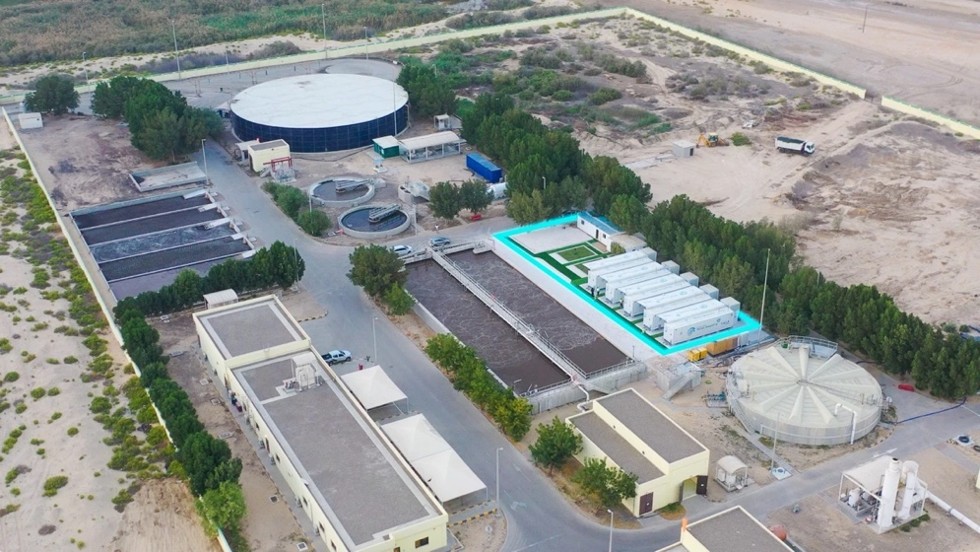
At Al Razeen in Abu Dhabi, capacity increased from 5,000 to 9,000 m³ a day in 20 days.
At Marriott’s Bab Samhan hotel in Riyadh, a treatment installation beneath the reception area handles blackwater, greywater, laundry and kitchen wastewater, supplying recovered water for reuse within the property.
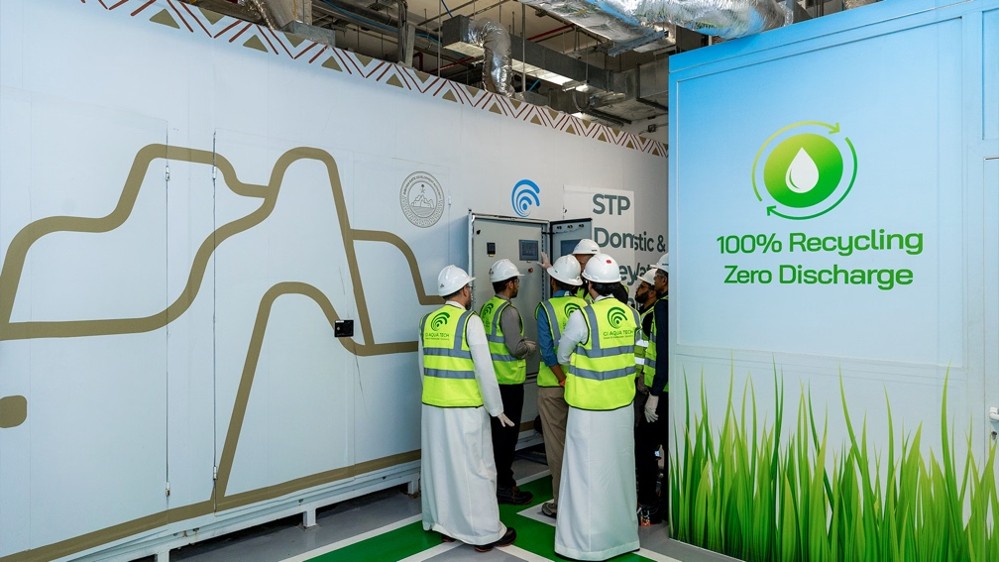
A Saudi Water Authority project in an upmarket residential neighbourhood illustrates another direction: treating and reusing wastewater where it is generated, reducing dependence on extensive networks carrying it to centralised works.
Biological treatment has served society for generations. Its vulnerability to changing flows and operating conditions nevertheless demands frank discussion. Our professional responsibility is to examine failures openly and assess alternatives against operating evidence, environmental outcomes and whole-life cost.
We live in an age when artificial intelligence and other technological advances are rewriting entire industries. Wastewater deserves the same ambition.
The bold decision now is to give proven alternatives a meaningful place in our infrastructure.
The next generation of wastewater treatment has arrived. Have our decisions caught up?
www.giaquatech.de

More from the water sector
Find out how the UK water sector is informing, innovating, and influencing change