
40 years of Future Water Association: our story so far
The voice for the water supply chain
For an association built around looking forward, this year we've allowed ourselves to look back. 40 years back, to be precise.
The story of Future Water Association, known for most of its life as the Society of British Water and Wastewater Industries, or SBWWI, is really the story of the UK water supply chain strengthening its voice, decade by decade, meeting by meeting, member by member.
Read the PDF version
The story begins...
1986 is remembered in the water sector for the white paper that set the blueprint for privatising England and Wales' 10 water authorities. It was a moment of huge uncertainty for the companies who supplied pipes, pumps, valves and materials into the industry. These were businesses that would keep the taps running and the sewers flowing, but who had no collective voice of their own.
At the time, the network they supplied into was in a poor state. Sewers were collapsing at a rate of 16 per 1,000 kilometres every year. A third of water mains were so corroded that brown water was running out of household taps. A quarter of all treated water was being lost to leakage before it ever reached a customer. The sector was underfunded, under pressure, and hungry for investment and transformation.
So, in July 1986, a group of suppliers from Society of British Gas Industries (SBGI), met in Coventry to talk about forming an association specifically representing the water industry, reportedly the first trade association to address the UK water network.
The following November, the Society of British Water Industries (SBWI) was launched, led by Bill Sinden, with a mission:
"To help members serve the industry better by providing a forum for discussion and dissemination of information."
That first AGM made the record books for a different reason too: a bomb scare brought proceedings to an untimely close, though it was thankfully just a scare.

Laying the groundwork
By 1988 the young Society had outgrown borrowed premises from its sister association, the SBGI, and needed a home of its own. Anne Kirby was appointed Assistant Director, and the headquarters moved to Leamington Spa.
The Society's growth mattered at a time of great sectoral change.
The 1989 Water Act privatised the 10 regional water authorities under the same Conservative government that had commissioned the original white paper. It brought in new regulators alongside it: Office of Water Services (Ofwat) and the National Rivers Authority (which later became the Environment Agency in 1996). The Drinking Water Inspectorate (DWI) came a year later, in 1990.
The same period saw the water industry enter its first Asset Management Plan period, AMP1. This would become a recurring five-yearly investment cycle, and one that put roughly £6 billion into a network the Society's own members had spent three years describing as underfunded.
Anne became Director in 1993, establishing the liaison meetings with water and wastewater companies that remain central to the Association's work today, connecting members with company needs, procurement and investment programmes.
In June 1998, Carol Hickman applied for the role of Assistant to the Executive Director, shadowing Anne Kirby ahead of her retirement later that year. On hearing she'd got the job, Carol recalls telling her husband, "That's fantastic……this will be a doddle!" It turned into rather more than that. A role she'd go on to make her own for the next 16 years, taking the Society through four AMP investment cycles, spanning three changes of government, from John Major's to Tony Blair's to Gordon Brown's, each bringing fresh reviews and reforms for the sector to absorb...
The addition of the second 'W'
The turn of the millennium brought the association's next big shift. In 2001 the Sewer Renovation Federation joined forces with SBWI. The merger reflected something the Society had been becoming for years: an association not just for water, but for wastewater too.
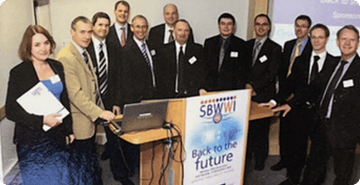
The Society of British Water Industries became the Society of British Water and Wastewater Industries, SBWWI, a name, and a responsibility, to provide even more connections for the sector.
The Society introduced two key areas to drive innovation: the Water Dragons competition, launched in 2005 and formally established as an annual fixture in 2008, and the Innovation, Research and Development Group. Together, these gave suppliers, including many smaller companies, a platform to pitch new products to the industry.
One of the founding members, AVK UK (now a partner of the 40th celebrations) said at the time how impressed they were of the Society's "innovation within the industry through seminars, exhibitions and its own Water Dragons industry award", noting that as an innovator, the competition has opened up opportunities to showcase their strengths.
By 2010, as the sector entered AMP5, annual investment had climbed to £22 billion. A new coalition government under David Cameron and Nick Clegg inherited a sector reshaped by the Pitt (UK flood policy after the 2007 floods), Cave (review of competition and innovation in water markets) and Walker (charging for household water and sewerage services) reviews of 2008 to 2010. SBWWI became a regular voice in the DEFRA, Ofwat and Environment Agency briefings that followed, secured seats on industry steering groups, and sponsored the All Party Parliamentary Water Group to keep the supply chain's concerns in front of MPs.
When government confirmed plans to transfer private drains and sewers into water company ownership, SBWWI didn't simply respond, it acted, establishing the Private Sewers Forum, bringing together the Society alongside eight other trade bodies, EU Skills, Water UK, the Home Builders Federation, and CCWater, to work through the practicalities before transfer took effect in October 2011.
Marking the Society's 25th milestone in 2011, then-Chairman Martyn Hopkinson reflected on how far the association had travelled since his own involvement began in the mid-1990s:
"With the addition of the second 'W', the Society has become truly representative of all sectors of the UK supply chain to the Water & Wastewater sectors."

Becoming Future Water Association
The Society's next reinvention came in 2015, when SBWWI became the Future Water Association, a name that looked forward as the community had always done.
It was a fitting moment for the rename. The wider sector was moving into its own era of digitalisation and competition: smart metering, IoT and leakage detection technologies were transforming how water companies managed their networks through the 2010s.
Northumbrian Water hosted its first Innovation Festival in 2016, putting the sector's appetite for new thinking on public display.
2017 then brought the launch of the Open Water retail market, opening up competition for non-household customers for the first time.
In an industry that was ready for rapid change, Future Water Association was better placed to speak for its members in that environment, one that reflected an increasing focus on innovation, sustainability and the long-term resilience of the network.
The same year the Association changed its name, Carol Hickman stepped down after 16 years and Paul Horton was appointed the Association's new Chief Executive. Paul's background across CIWEM and British Water had given him a close-up view of how policy gets made and where regulators were heading.
Leading since 2015
Under Paul's leadership, the Association has put its weight behind the things members advocate for: a focus on asset health as networks age, resilience as pressure on the industry grows, future-proofing infrastructure as the climate changes, and sector talent as the workforce transforms.
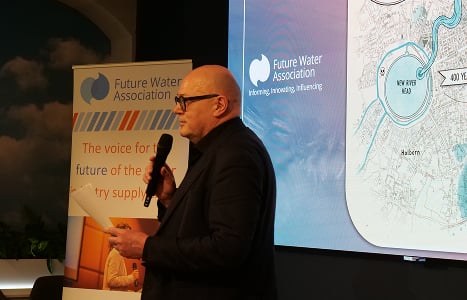
"40 years ago, our founders came together because the supply chain needed a collective voice in an era of uncertainty. Reaching this milestone in 2026, at a time of major regulatory, environmental and operational change, shows just how enduring that purpose is.
Over the past 11 years as CEO, I have seen our members continually step up: championing innovation through Water Dragons, contributing to important work such as the Cunliffe report and industry consultations, and helping shape conversations on leakage, metering, resilience and asset health.
When COVID came in 2019, we adapted quickly, moving online, hosting events virtually, and creating new ways to stay connected with members and partners.
Partnership has always been central to our DNA. From running the secretariat for the UKSTT until 2020 to collaborating with partners across the wider infrastructure landscape, we have long recognised that the sector's greatest challenges cannot be solved in silos.
That spirit of evolution has continued, from the development of Networks November in 2022, and our growing support in areas such as Black History Month in the water sector, skills, and inclusion.
The introduction of the FWA Report Card in 2024 gave a comprehensive evaluation spanning asset health, leakage, sewer issues, research, people and innovation, graded A*-F by our community, to show how well the sector is truly doing. To act as a compass for the future.
Future Water has never been about standing still; it has been about informing, influencing and bringing people together to move the sector forward.
I am hugely grateful to the members, chairs, partners and colleagues, past and present, who have helped shape the Association's direction over that time. Their expertise and commitment have ensured that Future Water remains a place for frank conversation, practical collaboration and fresh thinking. We do not just observe the future of water; we help build it."
— Paul Horton, Chief Executive, Future Water Association
Community matters more now than ever
The UK sector is now in AMP8, running to 2030, with a record £104 billion of investment committed, the largest AMP settlement to date, and a figure the founding members meeting in Coventry in 1986 could scarcely have imagined. Ofwat has also significantly increased the funding available for innovation within this AMP, and Future Water Association has made sure its members have a steer in shaping how it's used, running member consultations and hosting events to support the supply chain's own priorities.
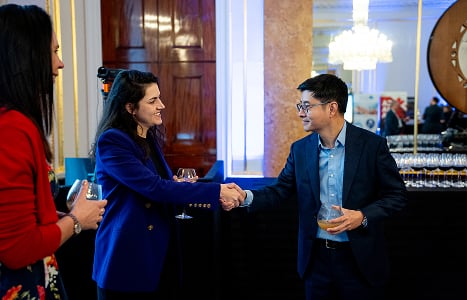
Today, the Association counts more than 125 members from right across the supply chain, a fair way from the 32 companies who gathered in Coventry in 1986, but built on exactly the same idea: that suppliers to the water industry are stronger, and better heard, together.

On the cusp of change, again
Fittingly, the Association's 40th year lands in the middle of the biggest shake-up the UK water sector has seen since privatisation.
The 2020 release of Water UK's Net Zero 2030 Routemap saw the sector make a commitment to reach net zero by 2030. There's now a sharpened focus on storm overflow reduction and nature-based solutions as public and political attention on the network has intensified and changing climate conditions put pressure on infrastructure. The Water (Special Measures) Act 2025 gave Ofwat new powers to ban executive bonuses where environmental standards aren't met, a direct response to public anger over sewage discharges and boardroom pay.
Ofwat's 2024 price review promised the sector £104 billion through to 2030, a record figure to date.
In 2025 the Cunliffe Report set out 88 recommendations for a fundamental reset of the sector, and in 2026 outlined that Ofwat, the Drinking Water Inspectorate (DWI) and the Environment Agency are to merge into a single super regulator, one built not just to consolidate oversight, but to shift toward a more supervisory model of regulation.
Thames Water's debts crept toward £20 billion, and nationalisation has gone from unthinkable to a possibility for the first time since privatisation began.
It's the kind of moment SBWWI was built to navigate for its members in 1986, and one Future Water Association is just as ready to lead for them now.

More from the water sector
Find out how the UK water sector is informing, innovating, and influencing change