
The key to making a profit in business
Date published:
July 15, 2020
The ultimate aim of any business owner is to achieve strong profits, but achieving this goal is not always as straightforward as it may first seem.
Even experienced entrepreneurs can struggle to achieve profit goals for their business and it is not uncommon for business owners to try many techniques before they find a method that works for them.
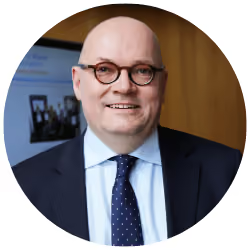
Watch Paul Horton, CEO of Future Water, chat with Mark Campbell-Blake, Managing Director of Greddf, about profit in business. During the interview Mark shares his expertise on:
- the process of making a profit
- some of the common mistakes
- what business owners can do to make their business more efficient and give themselves the best opportunity of making a profit.
[maxbutton id="34" url=" https://bit.ly/2ZRYhSq" text="Watch the interview" ]



More from the water sector
Find out how the UK water sector is informing, innovating, and influencing change
Open letter: Making Water-Smart Buildings the New Normal
On behalf of its members, partners and supporting organisations, Future Water has written an Open Letter which needs your support.
40 years of Future Water Association: our story so far
From 32 suppliers meeting in Coventry in 1986 to 125+ members today, explore 40 years of Future Water Association shaping the UK water sector.
Future Water Award Finalists 2026
Future Water marked its 40th anniversary by recognising talent in the UK water sector. The night included partners, members and industry organisations, all celebrating the past, present and future of water.