
PR24 first-year results: the role of field operations
PR24 first-year results: the role of field operations
The first year of the 2025 to 2030 investment period has passed, and the early performance picture is mixed. Ofwat, the Environment Agency, Natural Resources Wales and the Drinking Water Inspectorate have published their first joint report on water industry performance, bringing together the latest available data on drinking water quality, environmental performance and customer service.
The findings highlight the challenges facing the sector, with water companies meeting less than half of their performance targets.
A few numbers from the joint report stand out:
- 2,991 pollution incidents, 84 of them serious
- 142 of 2,254 environmental improvement actions missed
- Supply interruptions improved at the median, but several companies experienced significant deterioration
- Average customer satisfaction is falling, with a widening gap between the best and worst performers
- Six companies are now on Drinking Water Inspectorate transformation programmes
All this sits against around £104bn of planned expenditure over five years. The question is whether the work gets done efficiently, effectively and with the evidence to prove it.
What is PR24?
PR24 (Price Review 2024) is Ofwat’s regulatory price review for water companies in England and Wales, covering the five-year period from April 2025 to March 2030, also known as AMP8.
The review sets out how much water companies can charge customers, their expenditure allowances and the performance standards they must meet.
With around £104bn in planned expenditure across the sector, PR24 places greater emphasis on improving water quality, reducing pollution, tackling leakage and delivering more reliable services for customers.
What does PR24 mean for water companies?
Under PR24, water companies must deliver improvements against performance commitments covering areas such as leakage, pollution incidents, sewer flooding, supply interruptions and customer satisfaction.
These commitments are linked to Outcome Delivery Incentives (ODIs), meaning companies can face financial penalties for underperformance or receive rewards for exceeding certain targets.
For operational teams, this places greater pressure on delivering work efficiently, coordinating contractors and maintaining accurate records of completed activity.
Why operational performance matters under PR24
When customer satisfaction drops, the instinct can be to fix the messaging. But customers are often more concerned about a supply that’s off for hours, a crew that didn’t turn up or a repair that needed three visits.
Many of the performance challenges facing water companies come down to how quickly problems move from reported to resolved. That journey can involve an in-house team, one or more contractors, a street works permit and traffic management arrangements.
Every handover is a chance for delay, and those delays show up in performance against regulatory commitments.
Six ways Depotnet supports operational performance
1. Restoring supply and fixing leaks faster Interruptions are measured in minutes per property, and leakage targets depend on how quickly known leaks are repaired. In Depotnet, controllers see the live status of every job and who it’s allocated to, whether that’s an in-house gang or a contractor. The dispatch console and auto-scheduler let them allocate and reallocate work quickly, without chasing updates by phone.
2. Wastewater response Pollution incidents and sewer flooding often depend on how quickly the right crew arrives. Depotnet brings reactive jobs from every contractor into one view, and automatic SLA alerts flag potential overruns so teams can act before they escalate.
3. Permits and traffic management right first time A visit aborted because a permit or traffic management arrangement isn’t in place means lost time on a live job. Depotnet connects directly to DfT Street Manager, tracks which jobs still need a permit and keeps them out of the auto-schedule until it’s in place. Traffic management requests, planning and design validation sit on the same job, so requirements are checked before crews are dispatched.
4. One way of working across contractors When contractors report differently, nobody has the full operational picture. Depotnet gives water companies and their supply chains one platform to issue, track and close work, with connections to existing client systems where required. Performance becomes consistent and comparable, and problems surface earlier.
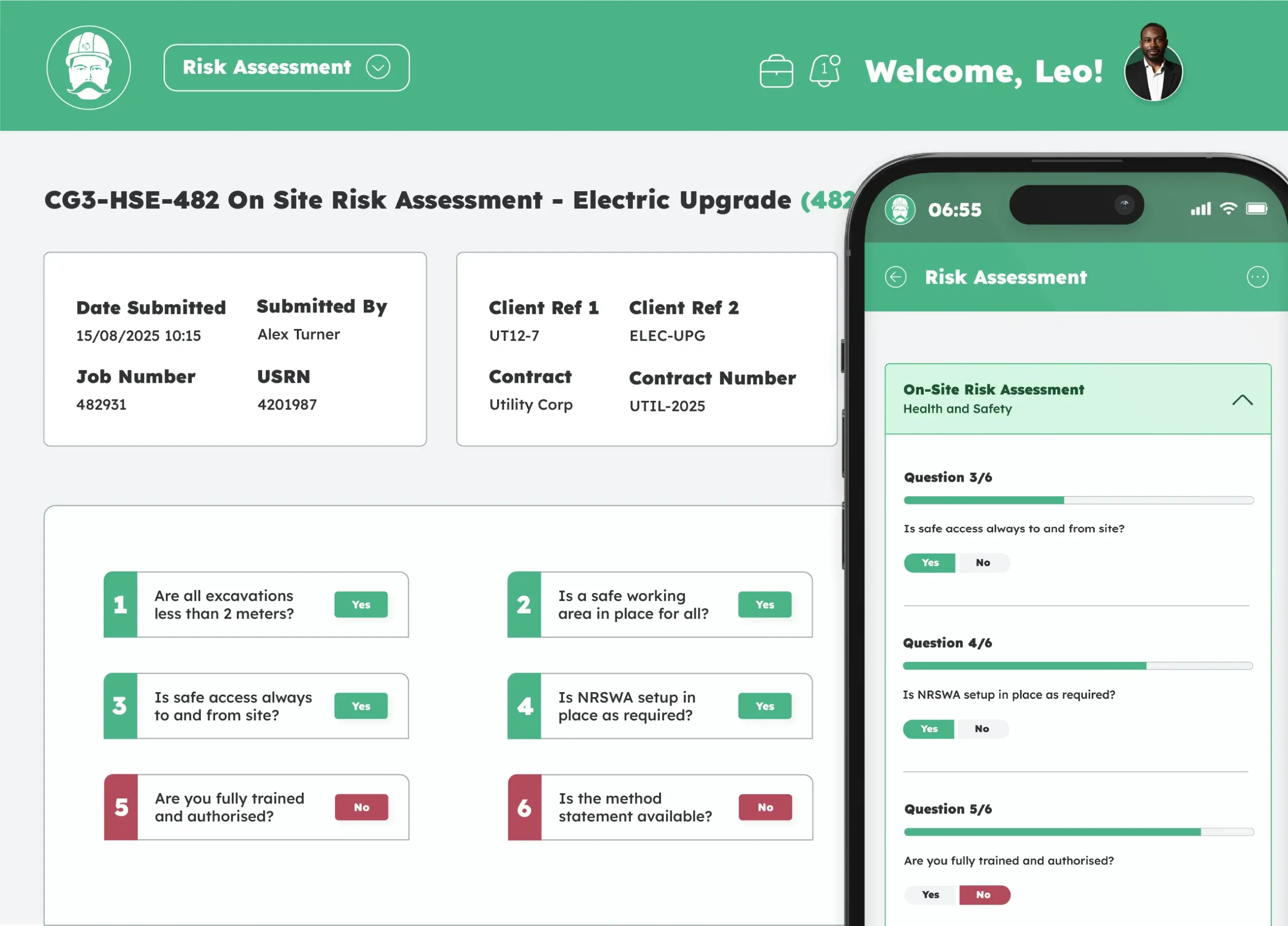
5. Safe, compliant crews on site Delivering work safely and consistently matters as much as completing it on time. Depotnet brings risk assessments, permit to work, competence records and safety briefings together, with automatic alerts before qualifications expire. Teams can confirm that operatives have the right competencies and information before work begins.
6. Evidence you can stand behind Accurate records are essential when demonstrating operational performance. Every job in Depotnet carries a timestamped status history from issue to sign-off, supported by geotagged photos and site records. Depotnet Intelligence analyses site photos to identify hazards, and Depotnet BI turns the data into reporting for performance reviews, incident investigations and improvement plans.
None of this requires a new strategy. It requires the work that’s already funded to move from report to resolution with fewer delays and better records. That’s the job Depotnet does.
The next four years of PR24: turning performance into progress
Year one has set the baseline for sector performance. With financial incentives and penalties linked to performance commitments, small gains in operational efficiency add up over the remaining four years.
Depotnet is job management software built for utilities and street works. We connect water companies, their contractors and field teams in one platform, providing visibility and control from the initial work request through to completion and sign-off.
The result is greater visibility of field operations, fewer avoidable delays and more reliable data to support performance monitoring and regulatory reporting.
If you’re reviewing how your field operations support your PR24 commitments, talk to Depotnet about where operational delays could be reduced.
Frequently asked questions about PR24
What does PR24 stand for? PR24 stands for Price Review 2024. It is Ofwat’s regulatory price review that determines water company expenditure allowances, customer charges and performance expectations for the 2025 to 2030 period.
What is the difference between PR24 and AMP8? PR24 is the regulatory price review that sets the funding and performance framework. AMP8 is the eighth Asset Management Period, running from April 2025 to March 2030, during which water companies deliver their investment and improvement plans.
How much investment is allocated under PR24? PR24 provides for around £104bn of water sector expenditure between 2025 and 2030, including maintaining existing services and investing in infrastructure, environmental improvements and service resilience.
What are PR24 performance commitments? PR24 performance commitments are measurable targets that water companies must work towards, covering areas such as leakage, pollution incidents, supply interruptions and sewer flooding. Financial incentives and penalties are linked to performance against these targets.
How can water companies improve operational performance under PR24? Water companies can strengthen operational performance through better job scheduling, contractor coordination, permit management and live job status visibility. Connected operational systems help reduce delays, improve oversight of field activity and maintain accurate records to support PR24 performance monitoring.
Sources
Water industry performance insights: Joint regulator report (GOV.UK)
Ofwat: Water company performance
Ofwat: PR24 final determinations, sector summary

More from the water sector
Find out how the UK water sector is informing, innovating, and influencing change