
It’s OK to Get Excited About Maintenance: Shifting from a Cost Centre to a Revenue Stream
By John W. Fortin, Organizational Transformation Leader, Hazen and Sawyer
Water infrastructure maintenance is often viewed as a "cost centre" and is sometimes only noticed when an asset fails. When asked to describe their maintenance program, most organisations respond with something like, “We’re mostly reactive.”
However, shifting from a reactive "fix-it" maintenance mindset to a proactive culture can transform an organisation’s maintenance program into a powerful driver of profitability. “Fix on fail” is an expensive mode of operation that can lead to unnecessary and expensive repairs, as well as expensive regulatory failures resulting in fines and reputational damage.
A proactive maintenance strategy can also improve staff morale. When they’re “firefighting” infrastructure and asset issues, maintenance engineers can become frustrated, as this reactive mode of operation can entail being called out in the evening or on weekends to fix issues that could have been mitigated if the organisation had a proactive maintenance culture.
Excitement in maintenance represents a cultural shift toward a predictive and proactive mindset. When teams are engaged with a common vision of excellence that’s supported from the top of the organisation, they move from waiting for expensive failures to occur to predicting and mitigating failures before they happen. This can come in many forms. For example, simple predictive tools are available that can measure and trend equipment vibration and temperature, allowing maintenance organisations plenty of time to investigate, plan, and schedule repairs. Meanwhile, viewing and treating maintenance engineers and technicians as a critical part of the workforce stimulates innovation. Excited teams create, improve, and optimise rather than just reacting.
Running your assets to failure and relying on a reactive maintenance mindset is an expensive business. Not only are labour costs significant when you’re reactively addressing issues (as urgent fixes typically require overtime rates and expedited shipping of parts). But you also need to factor in the costs of accelerating replacement using capital monies, and the cost of borrowing capital is expensive!
Over the past few decades, many organisations have embarked on an improvement journey from a reactive to a proactive approach. The positive impacts and financial benefits of a proactive maintenance culture have been well documented through industry research and maintenanceoriented association case studies.
Beyond Fixing Things: The New Revenue Streams
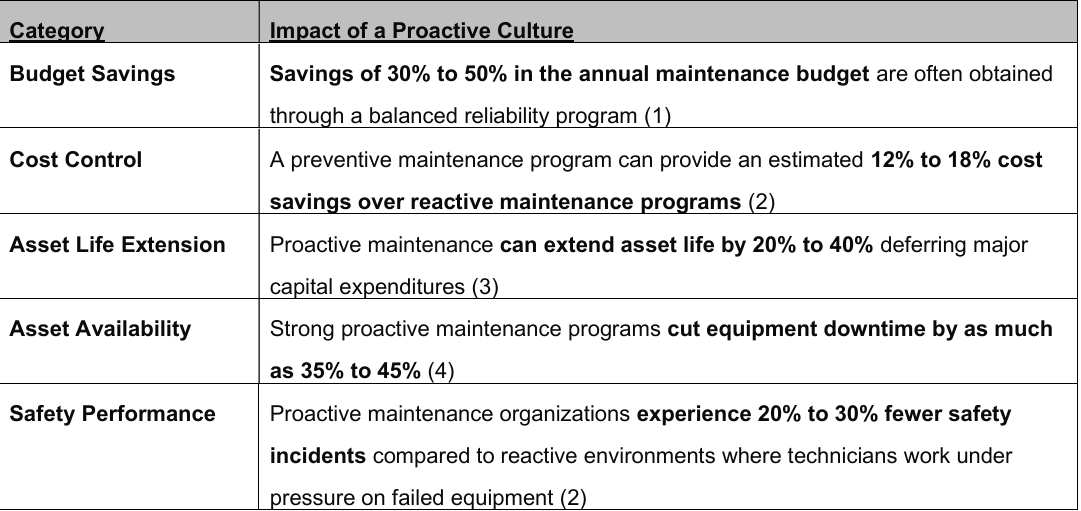
The table below provides insight into the financial case for a proactive maintenance mindset and how it can provide massive ROI to water and other asset-intensive organizations.
Conclusion: Reliability Equals Revenue
Getting excited about maintenance means recognising that your maintenance team is the guardian of production. Maintenance has graduated from a back-office expense to a front-line strategic advantage. Excitement in maintenance isn’t just about cleaner shop floors or better tools. It’s a fundamental shift where reliability equals revenue.
(1) NASA Reliability Centered Maintenance Guide for Facilities and Collateral Equipment, September 2008.
(2) US Department of Energy, O&M Best Practices Guide Release 2.0, 2024.
(3) PreventiveHQ.com, Proactive Maintenance: Complete Strategy Guide 2025, 2026.
(4) IFMA Research Report, Comparing the Cost of Reactive vs. Preventive Maintenance, 2025

More from the water sector
Find out how the UK water sector is informing, innovating, and influencing change