
Qatium - Member News - Back Collaborative tech: How Dunea is boosting network visibility & resilience
Date published:
April 10, 2025
Advancing water tech is an integral part of Qatium’s mission to make digital water management available to all utilities, big and small. Partnering with service providers who understand the importance of connecting the dots between water and data is a crucial part of that mission.That’s why we’re proud to partner with Float IoT, a firm that develops and provides highly innovative and cost-efficient IoT solutions for the water market, supporting water utilities in digitizing their water grids with hardware, software and AI. Headquartered in the Netherlands, Float IoT serves customers in ten countries and monitors over 750,000m3 of water per day.Float IoT: smart water innovationFloat IoT’s Smart Grid technology transforms the way water utilities manage their networks. It enables full control over water distribution systems by providing real-time visibility and actionable insights into every aspect of a water network. Their Smart Handholes are an innovative product that enable water utilities to sensorize their networks at minimum cost. They enable pressure readings at one-minute intervals, and battery/event-driven transmission intervals of five minutes.Working together with Qatium, Float IoT’s Smart Grid helps utilities make faster decisions with real-time data visualizations. And by integrating Qatium into their Smart Handhole products, key data like flow or pressure is directly connected for better decision making.
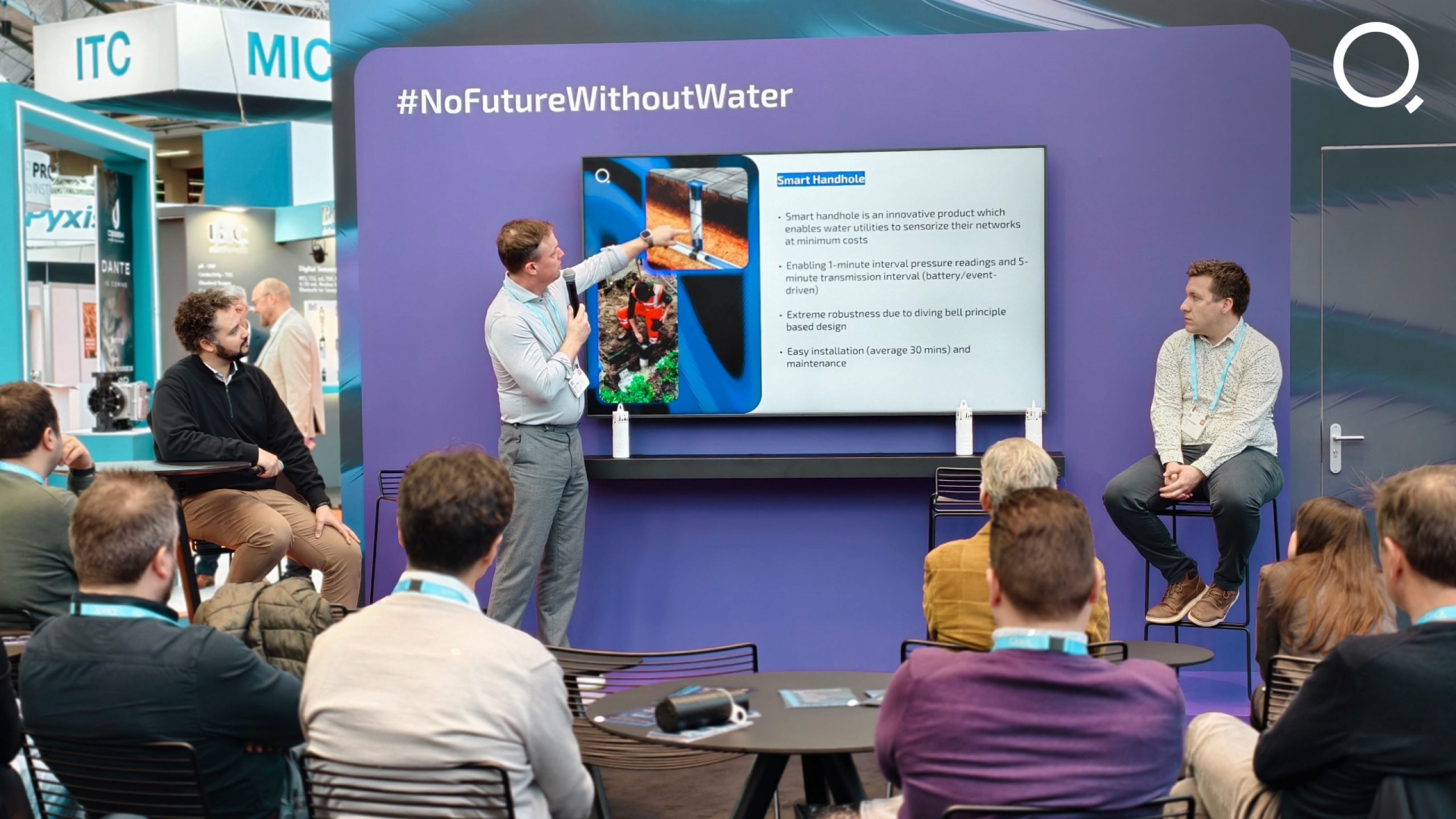
Integration of Float IoT and Qatium at Dunea enables faster response times and empowered engineers
The Dutch are world renowned for their innovative approach to water technologies, and the Dunea water utility is no exception. The Dutch organization serves the western part of South Holland, leveraging the impressive dunes that dot the country’s landscape.Their innovative water delivery method involves transporting fresh water from the Maas to filtration ponds above the dunes. It then sinks down through the dunes’ natural sand filtration and is softened, filtered and aerated, then treated with pulverized coal to remove any remaining residue. Filters capture the coal dust before the water is transported from reservoirs and into consumers’ taps. The process is a win-win for the protection of the dunes and the efficient filtration of drinking water.Despite their impressive system, Dunea struggled with low visibility into their network, which made repairs and maintenance slow and labor-intensive. They needed to optimize operations and reduce water loss through an integrated system that would enable better decisions, driven by data.Working with Float IoT and Qatium, Dunea deployed Float IoT’s Smart Handhole to enhance real-time data collection at key points in the network. Thanks to their continuous remote monitoring of underground assets, the need for manual field inspections has been reduced.By integrating Float IoT’s sensor data with Qatium’s digital platform, Dunea can now:-Visualize network performance in real-time-Diagnose issues and events happening in the network-Reduce the amount of time needed for engineers to answer and process operator scenarios-Improve network resilience against climate and demand fluctuations
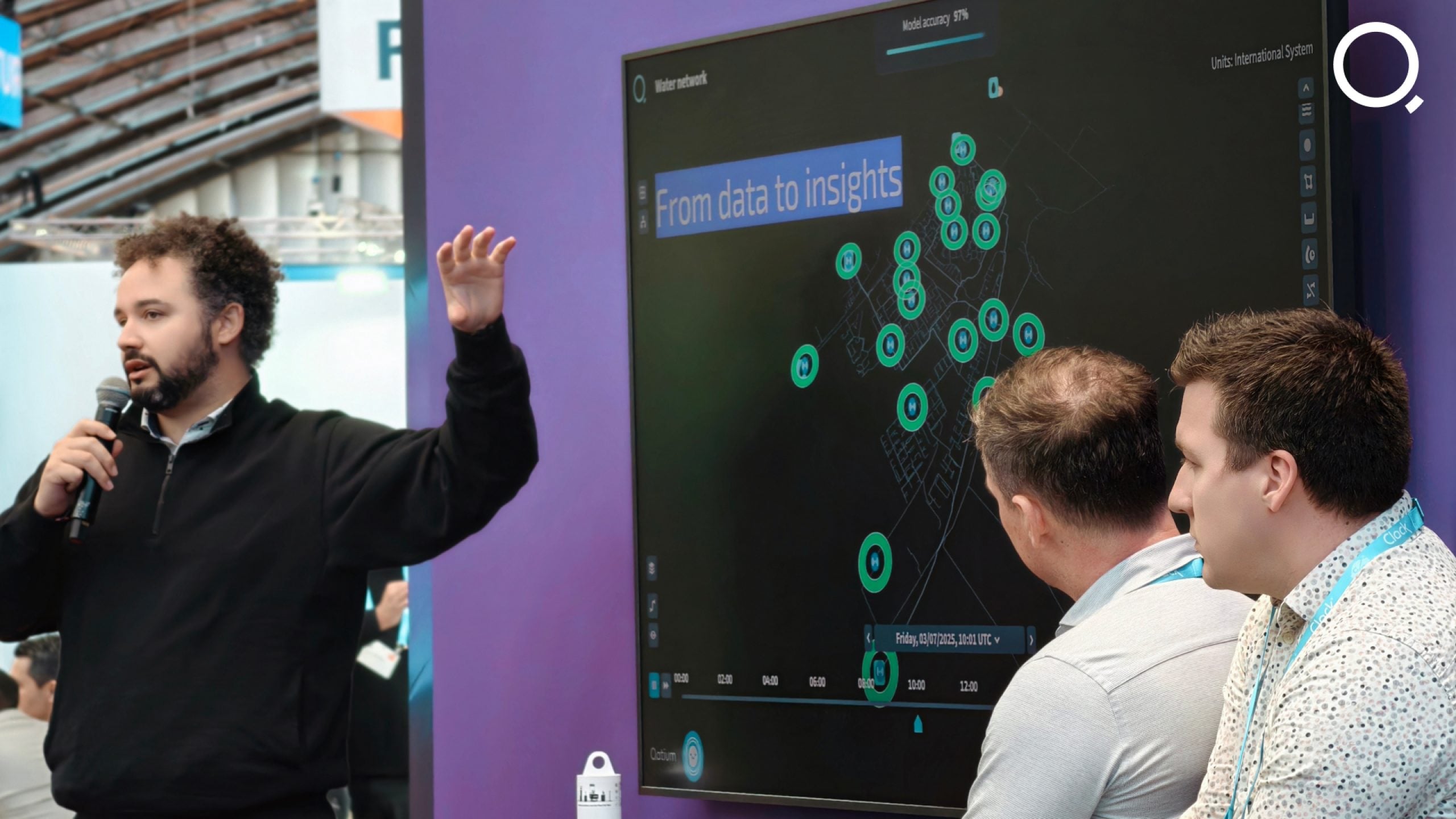
The integration has led to faster issue detection and resolution, with network anomalies being identified instantly. It’s also improved data-driven operation planning, allowing operators to optimize resources based on real-time insights.This partnership between Float IoT and Qatium demonstrates how effective it is to combine real-time IoT data with advanced water intelligence tools to revolutionize water utilities. Any water utility — no matter the size — can also benefit from smart water technology integrations to improve efficiency and resilience.The Netherlands is facing water scarcity threats due to climate change, population growth, emerging pollutants and spatial developments in a densely populated area. But Dunea’s implementation of innovative technologies like Float IoT and Qatium is proof of its resilience, climate adaptation, mitigation, and leadership.
Open water — problem-solving via collaboration
Innovation in water management thrives through collaborative ecosystems. The synergy between Qatium and Float IoT highlights how integrated solutions empower utilities like Dunea to address their challenges.By leveraging existing connections, water professionals can circumvent complex integration processes and focus on problem-solving. Qatium is dedicated to fostering partnerships that advance the digital water revolution. Discover our collaborative initiatives on our partner page and learn more about Float IoT’s contributions via their website.

More from the water sector
Find out how the UK water sector is informing, innovating, and influencing change
Future Water Awards 2026 – Nominations now open
Celebrate excellence in the UK water sector by nominating outstanding individuals and organisations for the 2026 Future Water Awards, recognising emerging talent, people, and above-and-beyond contributions.
Drive to tackle I&I with “high fidelity” data
New Environment Agency requirements on sewer overflow reporting are placing urgent pressure on water companies to better quantify and reduce groundwater infiltration in wastewater networks. In this article, Ryan Pearson, Head of Strategy at Metasphere (a Grundfos company), explains how high-quality data and advanced monitoring can help utilities meet new compliance requirements, reduce pollution events, and support lower-carbon, nature-based infrastructure solutions.
New Environment Agency guidance on sewer overflow reporting is pushing water companies to better quantify groundwater infiltration and reduce wastewater network overflows.
Reg 4 and Reg 31 — More Than Just Specification Language
Regulation 4 and Regulation 31 are often referenced in UK water industry specifications, but their impact on manufacturers and the supply chain is far-reaching. In this article, Groundbreaker Systems explores how approvals such as WRAS, KIWA and NSF shape product design, testing and compliance. While rigorous and costly to achieve, these approvals provide vital assurance that materials and products used in water networks will protect drinking water quality and perform reliably for decades. Ultimately, compliance is not just about certification, it is about safeguarding the safety and resilience of the UK’s water infrastructure.
How Regulation 4 and Regulation 31 approvals shape product testing, compliance and trust across the UK water supply chain.