
Waterwise Publishes UK Water Efficiency Strategy
Date published:
September 22, 2022

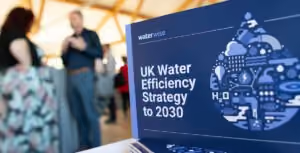
Waterwise has published the UK Water Efficiency Strategy to 2030.
The strategy was launched online on Wednesday 21 September),following a meeting last week at the London Wetlands Centre where more than 50 organisations joined Waterwise to support the strategy’s vision.
This summer has seen rivers drying up and reservoir levels dropping - if there was ever a time for the UK to focus on water efficiency it's now.
The need to ensure that there is enough water for people, the economy and the environment now and in the future - is paramount and Waterwise sets out its solution, which has been created collectively. The strategy, if adopted, could save at least 1,500 million litres of water every day by 2030 - the equivalent of building 10 new reservoirs across the UK.
There are 10 clear strategic objectives through to 2030, the strategy outlines the reasons for these, what needs to change, who needs to be involved and how it will track progress.


More from the water sector
Find out how the UK water sector is informing, innovating, and influencing change
Open letter: Making Water-Smart Buildings the New Normal
On behalf of its members, partners and supporting organisations, Future Water has written an Open Letter which needs your support.
40 years of Future Water Association: our story so far
From 32 suppliers meeting in Coventry in 1986 to 125+ members today, explore 40 years of Future Water Association shaping the UK water sector.
Murray McIntosh achieves Achilles UVDB Silver Plus accreditation
Murray McIntosh scores 100% in its Achilles UVDB Silver Plus audit, making specialist water recruitment faster and simpler to procure for AMP8 programmes.