
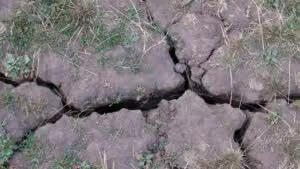
Europe suffering worst drought in over 500 years
Date published:
August 25, 2022
According to the Global Drought Observatory report:
- The severe drought affecting many regions of Europe since the beginning of the year has been further expanding and worsening as of early August. Dry conditions are related to a wide and persistent lack of precipitation combined with a sequence of heatwaves from May onwards The severe precipitation deficit has affected river discharges widely across Europe.
- Reduced stored water volume has had severe impacts on the energy sector for both hydropower generation and cooling systems of other power plants.
- Water and heat stresses have substantially reduced summer crops' yields. The most affected crops are grain maize, soybeans, and sunflowers.
- Recent precipitation (mid-August) may have alleviated drought conditions in some regions of Europe. However, in some areas, associated thunderstorms caused damages, losses, and may have limited the beneficial effects of precipitation. • Warmer and drier than usual conditions are likely to occur in the western Euro-Mediterranean region in the coming months till November 2022. In some areas of the Iberian Peninsula, warning drier than usual conditions are forecasted for the next three months.
The latest update of the Combined Drought Indicator (CDI), including the first ten days of August 2022, points to 47% of Europe being in warning conditions and 17% in alert conditions!
The full report can be read at: GDO-EDODroughtNews202208 Europe.pdf

More from the water sector
Find out how the UK water sector is informing, innovating, and influencing change
Open letter: Making Water-Smart Buildings the New Normal
On behalf of its members, partners and supporting organisations, Future Water has written an Open Letter which needs your support.
40 years of Future Water Association: our story so far
From 32 suppliers meeting in Coventry in 1986 to 125+ members today, explore 40 years of Future Water Association shaping the UK water sector.
Murray McIntosh achieves Achilles UVDB Silver Plus accreditation
Murray McIntosh scores 100% in its Achilles UVDB Silver Plus audit, making specialist water recruitment faster and simpler to procure for AMP8 programmes.