
CEO Blog- Reflecting on Black History Month: Progress, Positivity, and Purpose in the Water Sector
October’s Black History Month (BHM) events across the water sector have provided a powerful platform for reflection, learning, and action. As the Future Water Association facilitated discussions that brought together voices from across the industry, conversations illuminated both the challenges and opportunities ahead in building a truly inclusive sector.
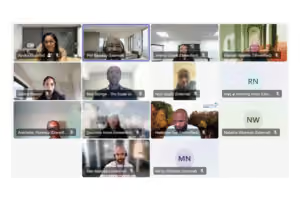

Building Community and CultureThe month began with a clear commitment: to foster diversity, equity, and inclusion (DEI) across the water sector. As Hannah Spencer, Operations Manager at Future Water Association, emphasised, “Black History Month is such an important opportunity to reflect on what’s happening in the sector, learn, and support meaningful change.”
This was echoed by CEO Paul Horton, who underscored the need for the sector to “renew itself” by attracting people from all backgrounds - making diversity “business as usual” rather than an agenda item.
Events brought together a broad coalition - utilities, consultants, advocacy groups, and training academies - demonstrating that collaboration is essential. The sector’s supply chain, regulators, and government partners were all recognised as vital in driving this change.
Honest Conversations and Lived ExperienceA recurring theme was the importance of honest, sometimes uncomfortable conversations. Speakers shared personal stories of navigating the sector, from overcoming barriers as minority professionals to the loneliness that can come with being “the only one” in the room.As one participant reflected:
“I moved here and began to understand that I had to learn to live as a Black man, because it’s something very new to me. There is segregation, so while learning this, within the company I work, it’s quite welcoming, but at the same time, we get lonely during the journey.”
Discussions also highlighted the “leaky pipeline” of talent—how the sector sometimes loses skilled individuals due to a lack of inclusion or progression opportunities. The need for cultural intelligence and empathy from leadership was repeatedly stressed, with calls for leaders to understand the lived realities of their teams and to create environments where everyone can bring their full selves to work.Importantly, the conversation also turned to the experiences of Black women.While the stories of Black men were shared powerfully, participants acknowledged that the representation of Black women requires much greater focus. The rise of women’s networks across the sector is encouraging, but they must become intentionally inclusive of ethnicity as well as gender. Without this, there’s a risk of replicating exclusion within diversity initiatives. Greater visibility of Black women in leadership, stronger collaboration between gender and ethnicity networks, and targeted sponsorship into senior roles are all essential to achieving genuine inclusion.Positives: Progress and PartnershipDespite challenges, there were many positives to celebrate. The sector has made clear strides in diversifying its workforce and recognising the value of different perspectives. Initiatives such as Affinity Water’s “One Group”, designed to address ethnicity challenges but open to all, were cited as examples of effective practice.Partnerships flourished throughout BHM, with organisations like Thames Water, Northumbrian Water, Anglian Water, and Action for Race Equality joining forces. These collaborations broke down silos, expanded reach, and encouraged shared ownership of progress.Role models and mentors were also celebrated. The presence of senior leaders and advocates from diverse backgrounds inspired early-career professionals and provided much-needed support. One graduate shared:“Having Ayisha conduct part of my interview and advocate for me made a huge difference. Without someone like her, I might not have had the confidence or opportunities I’ve enjoyed.”Actions: Moving Beyond Business as Usual
The events were not just about conversation - they were about action. Several concrete steps emerged:
- Mandating Participation: Attendance at DEI and BHM events should be non-negotiable, especially for senior leaders. Embedding these initiatives into professional development, such as offering CPD points, can ensure accountability and sustained engagement.
- Grassroots to Leadership: Engagement must start early—reaching out to schools and communities to attract young people from underrepresented backgrounds. “You need to see it to be it.”
- Collaboration and Measurement: Moving beyond “business as usual” means shared goals, transparent measurement, and long-term planning—through report cards, KPIs, and 10-year roadmaps.
- Allyship and Mentorship: Creating supportive environments for early-career professionals, particularly those from minority backgrounds, is vital. Investment in mentorship and allyship can close progression gaps and amplify diverse voices.
- Community Engagement: The sector must do more to engage the communities it serves, ensuring leadership reflects the diversity of those communities.
- Intersectional Inclusion: Women’s networks and DEI programmes must collaborate to address intersectionality—ensuring that both race and gender equity advance together, not separately.
Looking Ahead: Sustaining MomentumThere was some concern about the sustainability of DEI and BHM initiatives amid shifting political and funding landscapes. Participants agreed that it is vital to protect these spaces for open dialogue and to maintain progress, even when it becomes challenging.The message from this year’s events is clear: progress has been made, but there is still much more to do. By working together—being honest about challenges, celebrating successes, and committing to concrete, inclusive action—the water sector can become a model for equity and inclusion.As we look to the future, let’s carry forward the spirit of Black History Month—not just in October, but every day. Let’s ensure that diversity, equity, and inclusion are woven into the fabric of our sector, creating opportunities for all and building a stronger, more resilient industry for generations to come.

More from the water sector
Find out how the UK water sector is informing, innovating, and influencing change